
Common Lawn Pests in Kansas City
Kansas City lawns face a specific set of pest pressures shaped by the region's warm summers, clay-heavy soils, and the cool-season grasses most homeowners rely on. Fescue, bluegrass, and zoysia all sit squarely in the crosshairs of several insects that feed, burrow, or breed right in your turf.
The following five pests are the most common culprits behind damaged Kansas City lawns. Knowing what to look for and when makes a real difference in how much turf you lose and how fast it recovers.
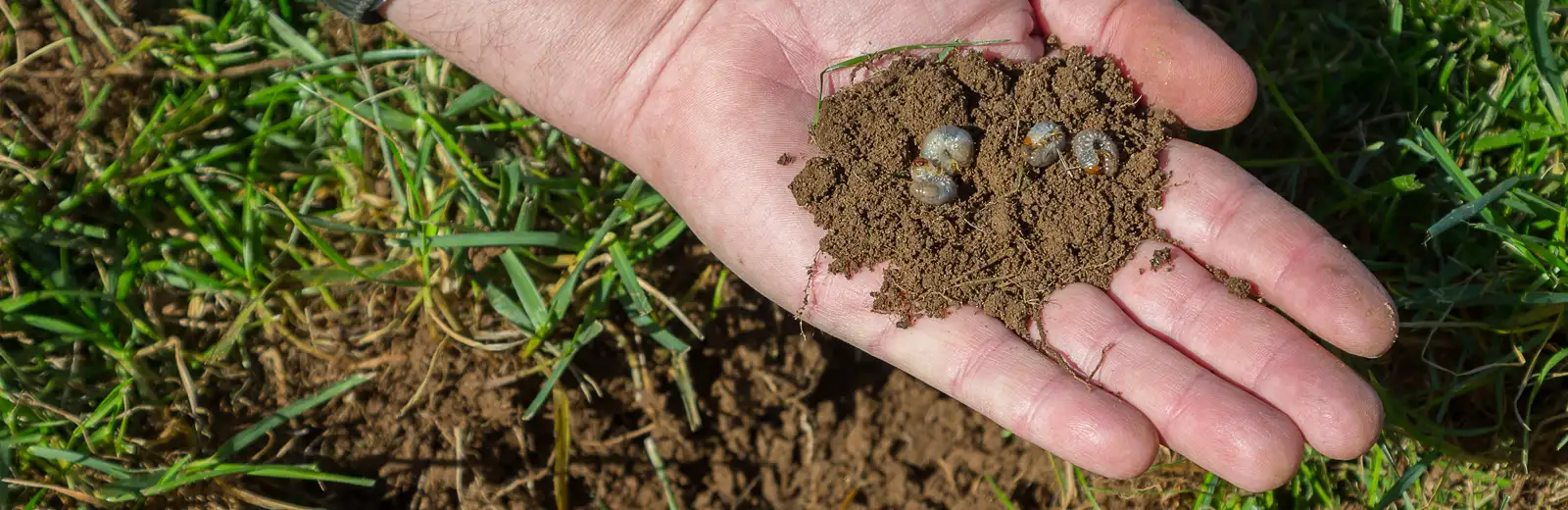
White grubs are the underground phase of several scarab beetle species. C-shaped and cream-colored, they spend spring and fall feeding on the fibrous roots of turfgrass just below the soil surface. The damage they cause is structural, not just cosmetic. When grubs destroy the root system, entire sections of turf lose their anchor and can be rolled back like loose carpet.
Grub populations are most damaging in late summer when larvae are actively growing, and again in early spring as they resume feeding before pupating. Secondary damage from skunks, raccoons, and birds digging for grubs can rival the pest damage itself.
Good to know: Grub damage and drought stress look nearly identical. Before treating, pull back a section of turf to confirm grubs are present. Misdiagnosis leads to wasted product and a lawn that still isn't recovering.
Armyworms are not a permanent Kansas City resident. They migrate north from southern states each summer, carried on weather systems and late-summer storm fronts. What makes them especially damaging is the speed and scale of the destruction. A healthy lawn can be significantly stripped in 48 to 72 hours once an infestation is active.
Unlike grubs, armyworms feed above the soil surface — directly on grass blades. They eat the entire blade, often leaving behind only the whitish skeletal veins. Fescue and bluegrass, the most common cool-season grasses in Kansas City, are preferred targets. Outbreaks are most intense in late summer and early fall following hot, stormy summers.
Note on grub control: A common mistake is assuming existing grub control will stop armyworms. It won't. Grub products target soil-dwelling larvae; armyworms feed above ground and require a surface treatment applied separately.
Chinch bugs are small — adults reach about 1/4 inch — and they do their damage through feeding, not chewing. They use piercing mouthparts to extract juice from grass blades and simultaneously inject a toxin that causes blades to wilt, yellow, and turn brown. The damage first appears as irregular purplish patches that dry out and expand during hot, dry weather.
Chinch bug damage is frequently mistaken for drought stress because it peaks in the hottest, driest periods of summer. The distinction matters because watering a chinch bug-damaged lawn can make conditions worse — these insects thrive where lawns are stressed and thatch is heavy.
Sod webworms are the larval stage of small lawn moths. The adults are easy to spot — pale tan moths that flutter up ahead of you when you walk across the grass at dusk. It's the larvae that cause the turf damage, feeding on grass blades at night from silk-lined tunnels they build in the thatch. Damage typically appears in midsummer and becomes most visible in early fall.
Each generation of moths lays eggs on grass blades, and in a single season sod webworms can cycle through two to three generations. Peak feeding hits cool-season grasses hard during July through September, the same window when lawns are often already under heat and drought stress.
Quick ID tip: If you walk across your lawn in the evening and small pale moths scatter ahead of you, that's a reliable sign sod webworms are active. The adults don't damage turf, but they're laying eggs for the next generation of feeding larvae.
Moles do not eat grass roots or blades — they are insectivores hunting earthworms and grubs underground. The lawn damage they cause is structural: raised surface tunnels, soft soil, and disturbed root systems that leave turf yellow and uneven. Their presence often signals a healthy soil ecosystem, but their digging is incompatible with a maintained lawn.
Mole activity in Kansas City peaks in spring and fall when earthworm populations are active near the soil surface. A single mole can construct extensive tunnel networks across a lawn within days. More moles in an area generally means a rich food source — including grub populations — so mole pressure and grub pressure sometimes go together.